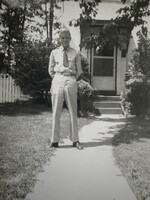
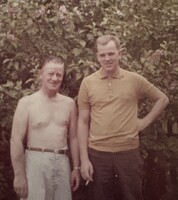
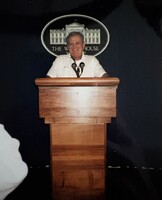
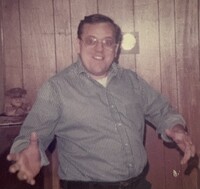
Walter O. Cardran, born 1935 in Boston, Massachusettes, was a Korean war vet who would go on to do classified work during the Vietnam war era. Coming home from the Korean war, Walt would be looking for work. He would manage to secure the role of Chief of Opperations of a Rosslyn Task Force utalized to interperet MAAG findings to modify the United States response to communism. This Interagency task force would oversee all other agencies altering their response, and our understanding of the Vietnam War.
Argument of Study:
The United States policy in Vietnam was primarily driven towards Anti Communist priorities of the Cold War, not the concern of Vietnams social, political or cultural survival. This would result in a narrow focus that led to ineffective strategies, alienated populations and ultimately created a more dire situation from the conflict. However, the conflict was never about the country’s wellbeing, merely the protection of American foreign interests.
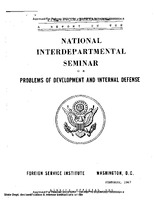
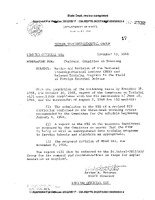
Reference DOC: CIA FOIA – 1968 “Review and Revision of the NIS”- Document demonstrates that the task and seminar was created with intent of “Foreign internal defense against communist subversion”- which demonstrates the training issues entirely framed communism as the enemy with complete disregard to Vietnams needs. These U.S. Officials were taught with regard to Vietnam as only a “Battlefield of the Cold War”
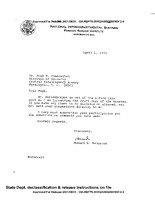
Reference DOC: CIA FOIA – Haugerud Letter (1971)- Haugerud notes that “The meetings at Rosslyn…focused on communist revolutionary warfare”. This document argues that interagency coordination tasks revolved specifically around fighting communism not the support or understanding of Vietnamese society. This coordination would go to prove the mindset of United States officials to use Vietnam as a proxy theater.
Reference DOC: FRUS – NSAM 283 (1964) NSAM 283- Would be the National Security Advisory Memorandum that President Lyndon B. Johnson would issue that created the seminar itself, which emphasized countering communist insurgency abroad, and delivered reports. This demonstrates that the act was a top down, systemic policy which prioritized the containment of communis threats, regardless of regional realities. This memorandum fulfils the idea that Vietnams political and cultural atmosphere would be disregarded for anti-communist doctrine.
Referenced Sources: Holm & Rudgers-
Richard L. Holm, The American Agent: My Life in the CIA (2003)
David F. Rudgers, Creating the Secret State: The Origins of the CIA, 1943–1947 (2000)
Holms reveals that the training involved was about fighting communism and did not have anything to do with understanding the issues of the host countries. This would demonstrate the central failings of the operation due to its root purpose.
Rudgers places the NIS in the broader context of Cold War framework defending against communist threats in protecting U.S, interest with equal disregard to local nation sovereignty. This would bring to light the failings of foreign policy due to a true underlying mission that upends policy ideals.
These sources disclose that Vietnam was merely treated as a pawn in a broader proxy war conflict that completely redefines the reason for U.S. involvement and reason for veteran service.
By focusing on communism alone the United States ignored corruption and local grievances which would alienate Vietnamese society. Counterinsurgency strategy that would be implemented in Washington were constructed without tailoring to Vietnams situation. Due to American interest in “defeating communism” rather than stabilizing Vietnam, the United States would reach escalation. This would further difficulties rather than resolve issues.
Interview Analysis:
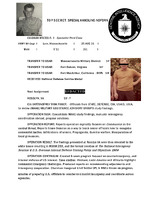
The situation in Vietnam would worsen not because the U.S. lacked individuals in the field that retained the proper mindset and skillset to improve the situation, rather because declassified documents of the Rosslyn Task Force prove the involvement of an Interagency Force geared to advise all involvement within a top-down mandate designed to combat communist threats and protect American interests abroad. The wars conclusion was not inclusive of lack of American ability rather the separation of a nation from her interests due to lack of regard for that country or its populous. The Interview with Walter Cardran confirms these sources as well as coraborates them by confirming location, dates and much of the classified informaton of the time, proving he was on the job. Much of the interview confirms the same work along with the smothering task of combatting comunism at home and abroad. The interview along with the sources that include individuals who sat in on my grandfathers National Interagency Seminar with reports and CIA documents, further prove the claim of argument. The interview would display that the United States focussed largely on fighting communism on a global scale, at what my grandfather considered a "school". This school was the NIS Seminar, using our documents we can confirm it was a task force that created a mandate for all other classified agencies on how to combat communism. Using our sources and research this demonstrates a overwhelming amount of intelligence towards an ideological war rather than a physical real world conflict offering an explanation for U.S. actions which redifines the conflict itself.
The personal portions of the interview contained recollection of friendships and indeological thinking throughout the conflict. The interviewie would mention his friendship with historian Bernard Fall who also would attend the NIS. Walt would display feelings of remorse over the conflict reflecting how he had lost three of his best friends in korea. During his rols in the Rosslyn task force and NIS he would as Chief of opperations oversee the filings of all classified materials the security of both procedures.



Research Sources:
Citations and Interview:
CIA FOIA Reading Room – Review and Revision of the National Interdepartmental Seminar (1968) https://www.cia.gov/readingroom/document/cia-rdp78-03061a000400010001-0
CIA FOIA – Letter from Howard E. Haugerud to Dr. Hugh T. Cunningham (1971) https://www.cia.gov/readingroom/document/cia-rdp84-00780r006100150001-3
Foreign Relations of the United States (FRUS), 1964–1968, Vol. XXXIII – NSAM 283 https://history.state.gov/historicaldocuments/frus1964-68v33/d283
Richard L. Holm, The American Agent: My Life in the CIA (2003) https://www.amazon.com/American-Agent-Life-CIA/dp/157488558X
David F. Rudgers, Creating the Secret State: The Origins of the CIA, 1943–1947 (2000) https://kansaspress.ku.edu/9780700610312/creating-the-secret-state