
David Layne
Biography
David Layne was born and raised in England, moving as a young adult to the United States in 1966 in search of opportunity. As an alien with legal status, he registered for the draft, as many males his age did during the peak of the Vietnam War. Eighteen months later, he received a draft notice. His options at this point in life included returning to England, but Layne decided to stay and serve. Wanting to “see the elephant” to experience combat and war firsthand, he joined the United States Army on December 7, 1967.
Layne completed basic training at Fort Benning, Georgia, where the Army recognized his mechanical acumen and assigned him as a helicopter transmission mechanic. He trained at Fort Eustis, Virginia, but ironically never worked in that skill during his service. Ambitious and physically able, he attended Airborne School and briefly served with the 82nd Airborne Division. His previous experience with parachuting made for a short duty assignment with the U.S. Army’s elite parachute team, the Golden Knights, before he received orders to attend Warrant Officer Flight School at Fort Wolters, Texas. Poor eyesight eventually disqualified him from flight training, an outcome he would later conclude may have saved his life, as almost half of his class became casualties in Vietnam

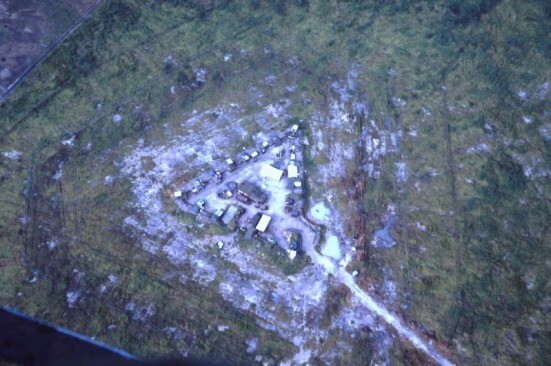
Foreward Base
Soon after, Layne deployed to Vietnam. His plane landed under emergency conditions as the base came under attack, and the soldiers were transported on buses fitted with chicken-wire windows to prevent grenades from being thrown inside. He spent his first days at the chaotic 90th Replacement Battalion before being assigned to Phu Loi in III Corps. All incoming soldiers first served in the security platoon, where they stood night guard on the perimeter and patrolled minefields. During one mission to spray vegetation-killing chemicals, almost certainly Agent Orange, a man beside him stepped on a mine and lost his foot, a moment Layne remembered as both tragic and surreal.
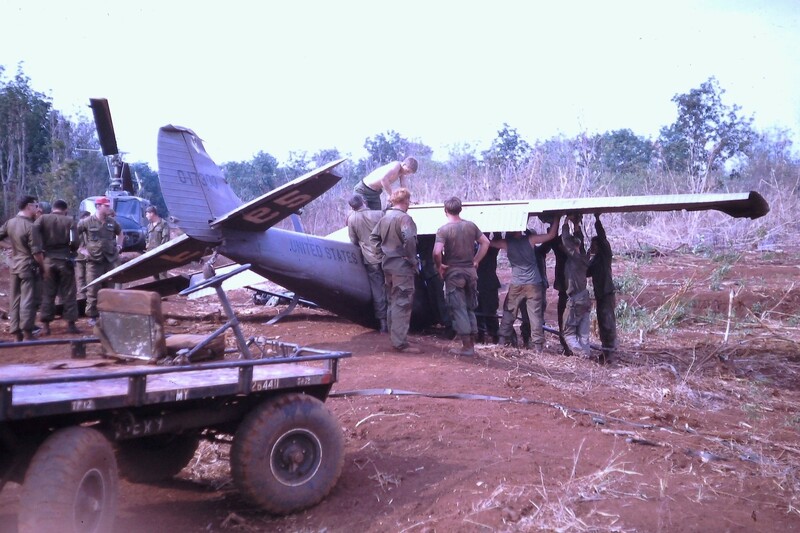
After several weeks, Layne was assigned to the 539th Transportation Company, the helicopter component repair unit. The work was mundane, and the racial tension throughout the base created a volatile environment. To be more active, he volunteered for the helicopter recovery unit, call sign Pipe Smoke. In this capacity, Layne would fly missions across the region, rigging downed aircraft to be lifted by Chinook helicopters and transported back for repair or disposal. The job was dangerous but had a sense of purpose, which was important to him.
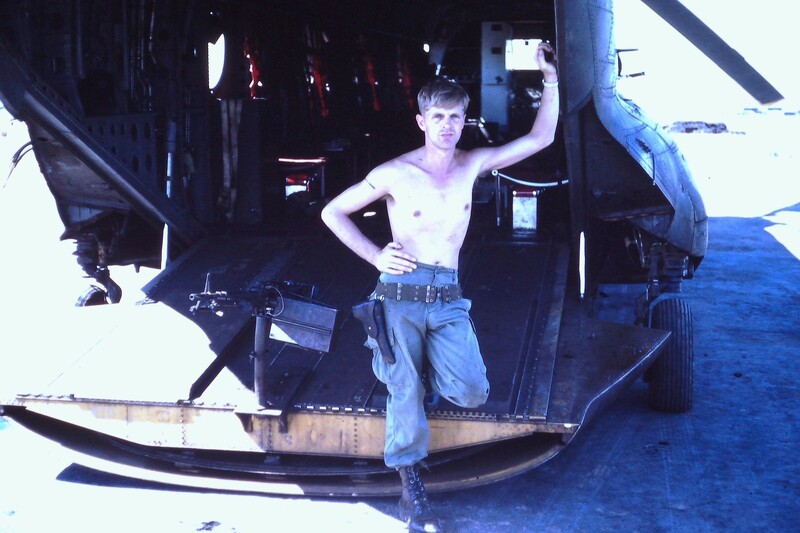
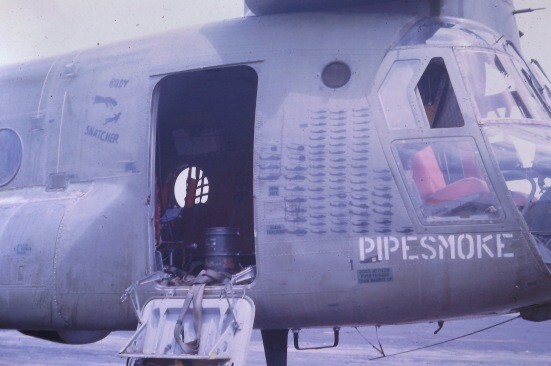
Mid-tour, foreign-born soldiers were dispatched to Hawaii, where they would be naturalized as American citizens. Layne went with the group but did not go through the naturalization process; he spent his week in Hawaii on leave and went back to Vietnam. He served honorably and, after the war, remained in the United States. As Layne reflects on his experience, he recalls Vietnam as a place of danger, boredom, tension, and also as a place where camaraderie was formed. His service would bring him face-to-face with the brutal realities of combat, the ambiguity of wartime identity, and the resilience that was demanded of those who endured it. His story stands as a testament to one immigrant's unique path: the decision to serve his adopted country in one of its most tumultuous eras.
Soldier Before Citizen
For far too long, immigrant soldiers have stood in the shadow of American military history. Their contributions, though considerable, have remained largely out of public memory. Recent scholarship has brought into sharp focus just how crucial their service was during the Vietnam War. Yet their stories rarely crop up in discussions of citizenship, sacrifice, or national identity. The experiences of David Layne, an English immigrant who was drafted into the U.S. Army in 1967, offer a window into the overlooked history and support the broader argument that immigrant soldiers played an important yet often unrecognized role in America's war effort.
Research by Zhang and Lee (2025) finds that the Vietnam-era draft not only drew immigrants into military service at high rates but also accelerated their long-term political and social integration into American society. Many, like Layne, faced the draft as legal aliens and made the conscious choice to serve rather than return to their countries of origin. The decision was not a light one: it meant embracing the risks of combat in a deeply unpopular war for a nation that had not yet granted full belonging. Layne’s path, from basic training at Fort Benning to helicopter recovery missions in Vietnam, mirrors the findings that military service often became a gateway to deeper attachment to the United States.
Other historians, such as Maxwell (2015), also reveal how citizenship and loyalty debates shaped the era, especially as draft resistance surged. Where some rejected service on political or moral grounds, immigrant soldiers often felt pressure to prove themselves worthy of inclusion. Their service occurred during a political climate marked by factionalism and shifting coalitions among the American public, according to Polsby (2017). Immigrant troops entered the military at a moment when national unity was fracturing, making their willingness to serve all the more significant.
Layne's experience in Vietnam represents broader patterns that scholars such as Pacheco (2021) documented, who emphasizes the psychological strain and the non-combat hardships that defined daily life for many soldiers. Whether the immigrant soldiers were standing perimeter guard, patrolling minefields, or recovering downed aircraft, tasks also developed in technical studies, such as those of Moore, Davis, and Leney (2002). The immigrant soldiers faced the same dangers as their American-born peers. All these services took place amidst global controversies over the war; for example, Clements (2020) makes a case that even allies of the U.S., such as Britain, were sharply divided, and it reminds us how many immigrants entered service during a period of international skepticism toward America's mission. Yet despite their sacrifices, immigrant soldiers remain largely invisible in the public narratives of Vietnam. Their stories complicate any straightforward definition of patriotism because loyalty is chosen rather than inherited. Recognizing soldiers such as David Layne restores an essential truth: America's wars have never been fought by citizens alone. Immigrants helped carry the burden, and their service deserves a rightful place in our national memory.

Audio
https://alabama.box.com/s/y5piw1o6mylhp7mn6hd8wet9m8fkf9jr
Sources
Zhang, Nan, and Melissa M. Lee. “Military Service and Immigrants’ Integration: Evidence from the Vietnam Draft Lotteries: American Political Science Review.” Cambridge Core, May 15, 2025. Accessed Oct, 1, 2025 https://www.cambridge.org/core/journals/american-political-science-review/article/military-service-and-immigrants-integration-evidence-from-the-vietnam-draft-lotteries/DD08CCB60608ED8B21EF2AA8A0440266.
Polsby, Nelson W. “Coalition and Faction in American Politics: An Institutional View: 11.” Taylor & Francis, July 5, 2017. https://www.taylorfrancis.com/chapters/edit/10.4324/9781315126043-11/coalition-faction-american-politics-institutional-view-nelson-polsby. Accessed Oct, 1, 2025
Maxwell, Donald W. “‘These Are the Things You Gain If You Make Our Country Your Country’: U.s.–Vietnam War Draft Resisters and Military Deserters and the Meaning of Citizenship in North America in the 1970s.” Peace & Change 40, no. 4 (October 2015): 437–61. https://doi.org/10.1111/pech.12142. Accessed Oct, 1, 2025
Clements, Ben. “British Public Opinion towards the Vietnam War and UK-US Relations during the 1964-70 Labour Governments.” The International History Review 43, no. 4 (November 8, 2020): 736–60. https://doi.org/10.1080/07075332.2020.1828140. Accessed Oct, 1, 2025
Moore, CE, BD Davis, and MD Leney. “Analysis of Pilot-Related Equipment and Archaeological Strategy in the Recovery of Aircrew Losses from the Vietnam War.” Journal of Forensic Sciences 47, no. 6 (November 1, 2002): 1210–14. https://doi.org/10.1520/jfs15552j. Accessed Oct, 1, 2025
Pacheco, Baltazar. “Coping Mechanisms: The Non-Combat Experiences of American Troops During the Vietnam War.” Master’s thesis, Texas Tech University, 2021. Accessed Oct, 1, 202